
Planargia
Landscapes, deep history and living cultures
Planargia is a historical-geographical region in the central west of Sardinia, whose villages and territories are located between the basaltic hills of the plateau and the jagged coast of the Coral Riviera. This patch of Sardinia is marked by a strong continuity between the natural environment, ancient historical stratifications and material cultures linked to agro-pastoral and maritime life.
A varied landscape between river, hills and sea
One of the most distinctive components of Planargia is the vast variety of landscapes in a relatively compact area: from the river Temo — the only navigable course on the island — which crosses the valley to the city of Bosa, to the vine-covered hills and low-altitude plateaus dotted with rural villages; from the expanses of vineyards dedicated to Malvasia di Bosa DOC to the sea cliffs and pristine beaches of the west coast.
Nature here is an integral part of the visit experience: the basalt reliefs and the slopes shaped by time are home to cork oak forests, Mediterranean scrub and panoramic paths, ideal for trekking, birdwatching and contemplation of the landscape.
Deep history — from antiquity to medieval villages
Planargia preserves signs of a long human presence: from the pre-Nuragic and Nuragic periods with towers, domus de janas and betili distributed in the territory (for example the remains of nuraghi in Suni and betili such as that of Pischina ‘and Ainos in Tresnuraghes) to the urban centers that developed in the Middle Ages and in the modern age.
These archaeological vestiges bear witness to a past of complex relationships between native populations and successive Mediterranean dominations, and are still today itineraries of discovery that integrate the natural heritage with the historical one.
Comuni
❌ Nessuna località trovata per area ID 30567.
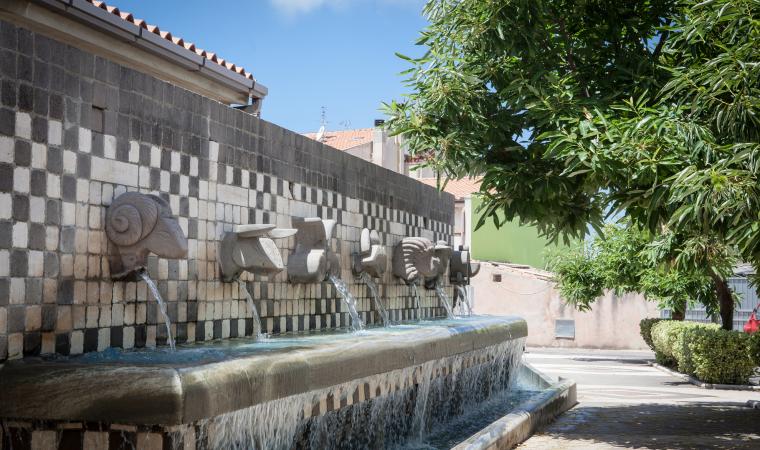


Architectural heritage and urban fabrics
The territory is dotted with historic centers and villages of great charm, each with its own architectural peculiarities. Bosa, the main urban center of Planargia and ancient royal city, is characterized by its medieval village overlooking the Temo river, dominated by the Malaspina Castle and the network of streets and alleys that lead to artisan shops and civic museums.
But it is not the only nucleus to offer historical beauty: the small villages draw a mosaic of stone houses, ancient churches, squares and carved portals, which speak of a deep-rooted rural history and resilient communities.
In Sagama, the parish church of St. Gabriel the Archangel stands as a symbol of the sixteenth-century architectural heritage, while traces of religious art and historical evidence can be found everywhere in the churches and public buildings scattered among the hills.
Wines, flavors and material culture
An identifying trait of Planargia is the oenology and culture of wine, in particular that linked to Malvasia di Bosa, an aromatic DOC wine present in various municipalities in the area, including Bosa, Suni, Tinnura, Flussio, Magomadas, Tresnuraghes and Modolo. This viticulture is not only an economic element, but a real experiential cultural attraction, intertwined with centuries-old traditions of grape processing and conviviality.
In Magomadas, the cultivation of vines and the ancient perched village offer evocative views and possibilities for tastings linked to the Malvasia road, attracting those who want to explore rural flavors and landscapes.
Artisan and community traditions
Alongside viticulture, Planargia keeps artisan and community traditions alive. Montresta is famous for its art of weaving rush and asphodel, a heritage of local knowledge that is reflected in the production of baskets and ornamental artifacts, an expression of ancient skills and the relationship with the surrounding nature.
The sea and the wild coasts
Along the western edge of Planargia the unspoiled coastline opens up, with beaches, coves, coastal towers and cliffs overlooking the turquoise sea. Places such as Porto Alabe, with its long sandy beach, offer a perfect complement to the cultural visit of the hinterland, integrating marine experiences and historical narratives of coastal defense.

An integrated travel experience
Planargia is proposed as a territory where history, nature, material culture and sensory landscapes come together. Here the visitor encounters not only isolated monuments, but a system of places and practices that are reflected in the daily life of the communities: from sunny vineyards to perched villages, from paths through the woods to the coast, each element participates in a coherent and engaging territorial narrative.
In this context, the enhancement of cultural and thematic itineraries — archaeology, food and wine, crafts and nature — can contribute to strengthening the perception of the territory as an integrated and differentiated destination in the panorama of cultural and sustainable tourism.

